
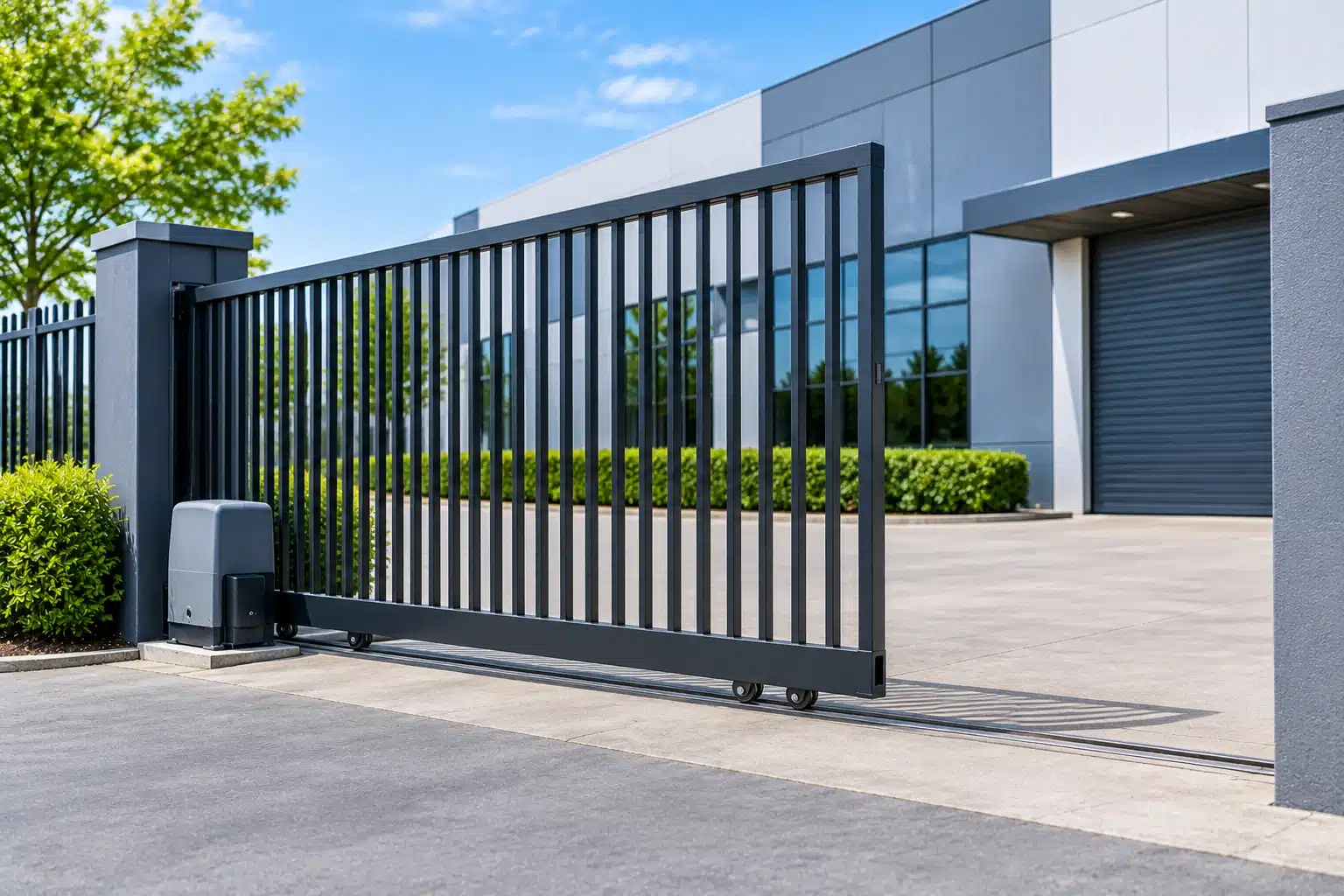
A commercial sliding gate that stops halfway can quickly become a problem for a business. It may prevent staff from entering the premises, delay deliveries, interrupt vehicle movements or leave an entrance unsecured.
The frustrating part is that the cause is not always obvious. Sometimes the gate track is obstructed or the wheels are worn. In other situations, the problem may involve the motor, safety sensors or electrical control system.
If your commercial sliding gate stops before reaching its fully open or closed position, it is important to identify the underlying fault rather than repeatedly operating it.
Let’s look at six common reasons why a commercial sliding gate may stop halfway and what Melbourne businesses should know about each issue.
1. Dirt, Debris or Damage in the Gate Track
The track plays an important role in allowing a sliding gate to move smoothly. Over time, dirt, stones, leaves and other debris can collect along the track.
When an obstruction gets in the way, the gate may struggle to travel across its full length. It might slow down, make unusual noises or stop at a particular point.
Track damage can also create problems. Corrosion, uneven sections or physical damage may increase resistance as the gate moves.
Common warning signs include:
- Visible dirt or debris around the track
- A gate that struggles at the same point during movement
- Grinding or scraping noises
- Signs of corrosion or visible track damage
Keep the accessible area around the track clear, but never reach into the gate’s movement path while it is operating. If the track appears damaged or the gate continues to stop, arrange a professional inspection.
2. Worn Wheels or Guide Rollers
Sliding gates rely on wheels and guide rollers to support and control their movement. These components experience regular use, particularly at commercial premises where vehicles enter and leave throughout the day.
As wheels and rollers wear, the gate may no longer move evenly. It can become noisy, slow or difficult for the motor to move.
In some situations, worn components create additional resistance. The motor may then struggle to move the gate through its full travel.
Look for these possible signs:
- Uneven or jerky gate movement
- Grinding or rattling sounds
- A gate that appears to drag
- Increased resistance during operation
Replacing or repairing affected components may restore smoother movement. However, the complete gate system should be checked to determine whether other parts have also been affected.
3. Gate Misalignment or Structural Movement
A commercial sliding gate needs to remain correctly aligned with its track and supporting components.
Over time, physical impact, ground movement, worn hardware or structural changes can affect alignment. Even a relatively small change may cause the gate to rub against another surface or create additional resistance.
This can explain why a gate operates normally for part of its journey but struggles or stops at a particular position.
Possible signs of misalignment include:
- The gate appears uneven when moving
- One section rubs against the surrounding structure
- The gate makes scraping noises
- Movement becomes progressively slower
- The gate repeatedly stops at a similar position
Misalignment should not be ignored. Continuing to operate a gate with excessive resistance may place additional strain on its wheels, track and motor.
A technician can inspect the gate’s alignment and determine whether adjustments or component repairs are required.
4. Commercial Sliding Gate Motor Problems
The motor is responsible for driving an automated sliding gate. If it develops a fault or struggles to move the gate, the system may stop before completing its opening or closing cycle.
Motor-related problems can have several causes, including worn internal components, gearbox issues, overheating or a motor that is not operating correctly.
However, a gate stopping halfway does not automatically mean the motor needs replacing. Mechanical resistance from the track, wheels or alignment can also make the motor work harder.
Warning signs of a possible motor problem include:
- The motor makes unusual humming or grinding noises
- The gate moves slowly or inconsistently
- The motor operates but the gate does not move correctly
- The gate stops during repeated operating cycles
- The system experiences recurring faults
A professional assessment should consider the motor alongside the physical gate and its drive components. This helps identify whether the motor needs repair, adjustment or replacement.
Reliant Doors provides commercial and industrial sliding gate repair services in Melbourne, including drive motor replacement, worn wheel and track repairs, and repairs to damaged gates.
5. Safety Sensors Detecting an Obstruction
Automatic commercial gates may use safety beams or other safety devices to detect obstructions and help prevent unsafe movement.
If a safety beam is blocked, misaligned or faulty, the gate controller may stop or reverse the gate instead of allowing it to continue.
This can sometimes look like a motor problem, even when the motor itself is working.
Things that may indicate a sensor-related issue include:
- The gate stops or reverses unexpectedly
- The problem happens intermittently
- The gate behaves differently when opening and closing
- A visible obstruction is present near a safety beam
Never bypass a safety device to force the gate to operate. Safety equipment should be inspected and tested by an appropriately qualified technician to confirm that the system is functioning correctly.
6. Electrical Supply or Control System Faults
An automatic sliding gate depends on electrical components and a control system to receive commands and manage movement.
A problem with the power supply, control board, receiver or connected access equipment may interrupt normal operation.
For example, the gate may respond inconsistently to a remote or keypad, stop during movement or fail to complete its operating cycle.
Possible warning signs include:
- The gate operates intermittently
- The remote or keypad does not respond consistently
- The control system displays a fault indication
- The gate stops without an obvious physical obstruction
Electrical and control-system faults require proper testing. Avoid opening electrical enclosures or attempting wiring repairs yourself. A technician can assess the power supply, controller and connected equipment safely.
How Can You Identify the Type of Sliding Gate Problem?
Different faults can produce similar symptoms. This table gives businesses a starting point for understanding what may need inspection.
| What you notice | Possible cause | What may need inspection |
|---|---|---|
| Gate stops at the same position | Track damage or obstruction | Track and gate alignment |
| Gate moves unevenly | Worn wheels or rollers | Wheels and supporting hardware |
| Gate makes grinding noises | Mechanical resistance | Track, rollers and drive components |
| Motor runs but gate struggles | Motor or drive problem | Motor and mechanical movement |
| Gate stops or reverses unexpectedly | Safety-device or control fault | Safety devices and controller |
| Gate operates inconsistently | Electrical or control issue | Power supply and control equipment |
These are possible causes, not a diagnosis. A professional inspection is the best way to determine what is actually preventing the gate from completing its movement.
What Should Melbourne Businesses Do When a Sliding Gate Stops Halfway?
When a commercial gate stops unexpectedly, avoid repeatedly pressing the remote or forcing the gate to move. Repeated operation may make an existing mechanical or electrical fault worse.
Instead, follow these steps:
- Keep people and vehicles clear: Prevent staff, customers and delivery vehicles from entering the gate’s movement area.
- Observe the symptoms safely: Note whether the gate stops while opening, closing or at the same position each time.
- Look for visible obstructions: From a safe position, check for obvious debris around the accessible track area.
- Record unusual behaviour: Note any grinding noises, warning lights or inconsistent remote operation.
- Arrange professional assistance: If the gate continues to stop, appears damaged or behaves unsafely, have the complete system inspected.
These observations can help a technician understand the issue. Do not attempt to adjust the motor, electrical wiring, safety sensors or mechanical components without the appropriate knowledge and equipment.
How Can Regular Maintenance Help Prevent Sliding Gate Problems?
A sliding gate used frequently at a commercial property experiences ongoing wear. Small issues can develop over time, particularly when moving components are not inspected regularly.
A suitable maintenance routine can help identify problems before they lead to unexpected breakdowns.
Depending on the gate system, inspections may include checking:
- Track condition and visible obstructions
- Wheels, rollers and supporting components
- Gate movement and alignment
- Drive components and motor operation
- Safety devices and operating controls
The inspection and maintenance requirements will depend on the type of gate and its operating conditions.
Businesses with multiple industrial or commercial doors can also explore Reliant Doors’ industrial door maintenance services to understand its preventative maintenance approach.
Should You Repair or Replace a Commercial Sliding Gate?
A gate stopping halfway does not necessarily mean the entire system needs replacing.
If the problem involves a damaged track, worn wheels, loose components or a repairable motor fault, targeted repairs may be appropriate.
Replacement or a larger upgrade may need consideration when the gate has extensive damage, recurring faults, obsolete components or an automation system that no longer meets the property’s requirements.
The decision should be based on the condition of the gate, the availability of suitable replacement parts, repair history and the needs of the business.
A proper inspection can help establish the most practical option rather than replacing components unnecessarily.
Need Help With a Commercial Sliding Gate in Melbourne?
A sliding gate that stops halfway can affect site access, daily operations and property security. Identifying the actual cause is important because the issue may involve the track, wheels, alignment, motor, safety devices or electrical controls.
Reliant Doors provides commercial and industrial gate repair and maintenance services across Melbourne. Its technicians handle issues including impact damage, worn wheels and tracks, failed hinges and drive motor replacement.
If your sliding gate is not operating as expected, contact the team to discuss the problem and arrange an inspection.
You can also learn more about Reliant Doors and its industrial door services.
Call 03 8372 5056 or email service@reliantdoors.com.au to enquire about your commercial sliding gate problem.